DIN 7991
Countersunk head screw,hex drive
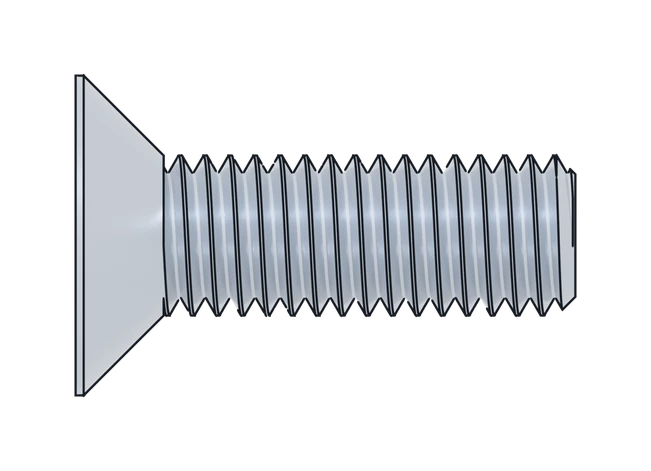
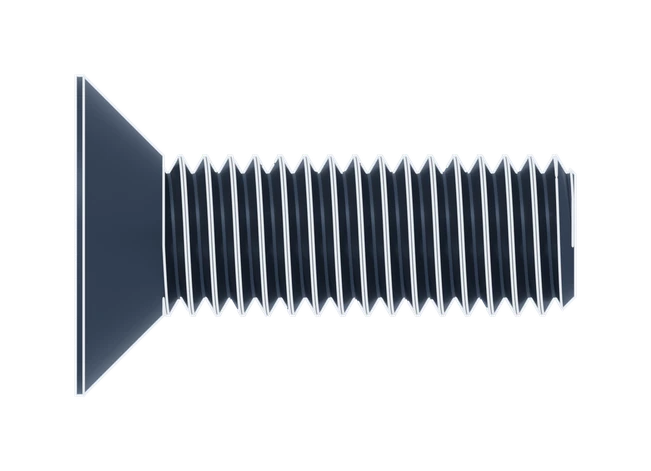
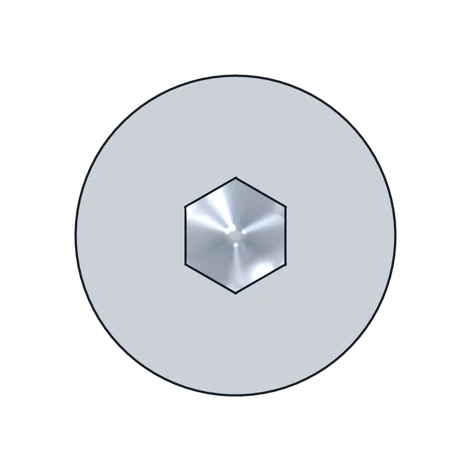
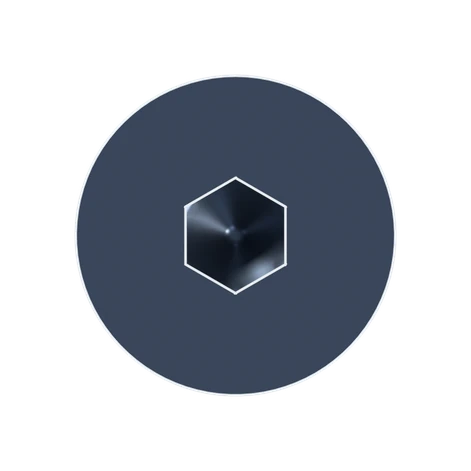
Values per DIN 7991:1986.
Work out the screw length you needOpens the bolted joint configurator with DIN 7991 chosen.Verified data
We have checked this data against reliable sources.MechLab Geek accepts no liability for any use of this data or its consequences. Check it before you use it. Legal notice.Spotted a mistake? Let us know.
About DIN 7991
What it is
A countersunk screw with a hexagon socket: the cone-shaped head sinks into a countersink and ends flush. Up to M20 the head has a 90° angle; M22 and M24 have 60°. An M10 has a 20 mm head and takes a 6 mm key.
Where it is used
On covers, guards, slides and any face where nothing may stick out, from M3 to M24.
DIN or ISO
ISO 10642 replaced DIN 7991, but the two heads are not the same: ISO 10642 gives a theoretical and an actual head diameter and a higher head. For that reason the site shows DIN 7991 alone for now.
Typical mistakes
- Measuring the length under the head. A countersunk screw is measured overall, head included.
- Cutting a 90° countersink for an M22 or M24, whose head is 60°.
- Putting a washer under the head. The cone needs its countersink.
- Expecting the full load of the strength class. ISO 898-1 and ISO 10642 give these screws a reduced load because of the head.
- Swapping DIN 7991 for ISO 10642 without checking the countersink depth: the heads differ.
References
- DIN 7991:1986 Hexagon socket countersunk head cap screws
- ISO 10642:2026 Fasteners — Hexagon socket countersunk head screws with reduced loadability
- ISO 898-1:2013 Mechanical properties of fasteners made of carbon steel and alloy steel — Part 1: Bolts, screws and studs