DIN 985
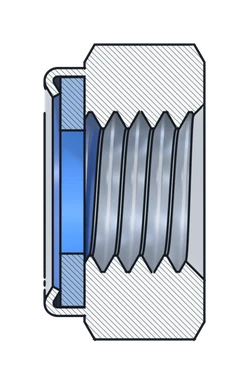
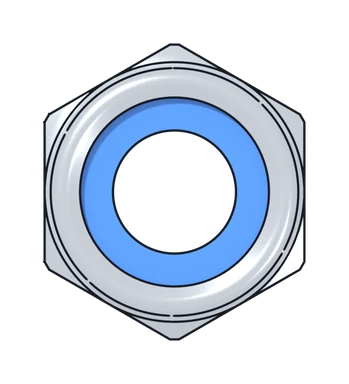
Hexagon lock nut,nylon insert

Values per ISO 10511:2012. The values follow this edition; the current one is ISO 10511:2025.Differs from DIN 985
Verified data
We have checked this data against reliable sources.MechLab Geek accepts no liability for any use of this data or its consequences. Check it before you use it. Legal notice.Spotted a mistake? Let us know.
Calculators that use this standard: Bolted joint configurator
About DIN 985
What it is
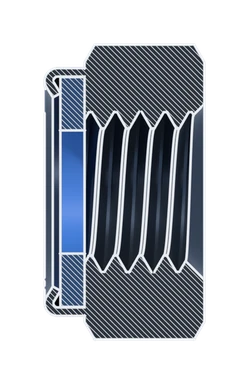
A hexagon nut with a nylon ring in its top, which the screw thread cuts into: the friction keeps the nut from working loose (a prevailing torque nut). An M10 to DIN 985 takes a 17 mm spanner and is 10 mm high, insert included.
Where it is used
On joints that vibrate or move (machines, vehicles, pivots and hinges), and wherever a nut must stay at a set position without being tightened hard, from M3 to M48.
DIN or ISO
ISO 10511 replaced DIN 985. The ISO nut is lower in most sizes: an M8 is at most 6.76 mm high against 8, an M10 8.56 against 10. M10, M12 and M14 have the ISO 4032 width across flats (16, 18 and 21 mm). ISO 10511 covers M3 to M36 without M18, M22, M27 or M33.
Typical mistakes
- Choosing a screw that stops inside the insert. The thread must pass right through the nut, with at least two pitches sticking out (ISO 4753).
- Reusing it again and again. The insert wears at each assembly and holds less.
- Using it where it gets hot. The nylon insert has a temperature limit; above it, an all-metal lock nut is needed.
- Bringing a 17 mm spanner to an ISO 10511 M10. It needs 16 mm, as do the ISO hex nuts.
- Counting on the DIN height with ISO stock: an ISO M10 is at most 8.56 mm high, not 10, and grips fewer threads.
References
- DIN 985:1987 Prevailing torque type hexagon thin nuts with nonmetallic insert
- ISO 10511:2012 Prevailing torque type hexagon thin nuts (with non-metallic insert)
- ISO 4032:2012 Hexagon regular nuts (style 1) — Product grades A and B
- ISO 4753:2011 Fasteners — Ends of parts with external ISO metric thread