DIN 934
Hexagon nut,regular
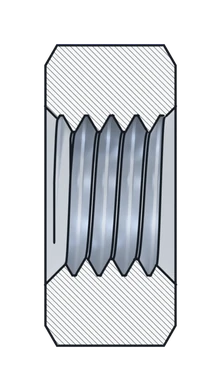
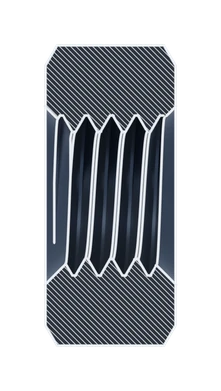
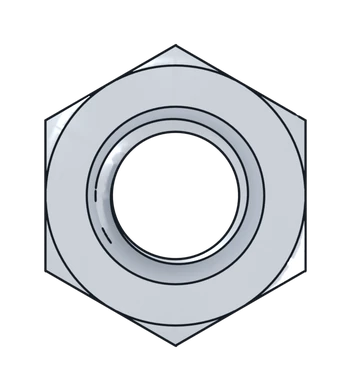
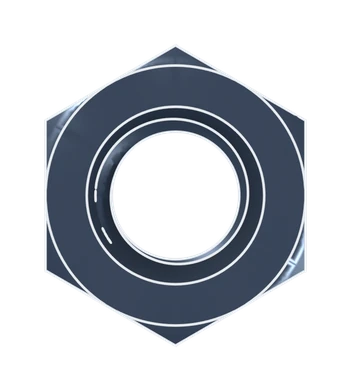
| Size | P (mm, coarse) | s (mm, nom.) | e (mm, min) | m (mm, max) | dw (mm, min) |
|---|---|---|---|---|---|
| 0.50 | 5.50 | 6.01 | 2.40 | 4.60 | |
| 0.70 | 7.00 | 7.66 | 3.20 | 5.90 | |
| 0.80 | 8.00 | 8.79 | 4.70 | 6.90 | |
| 1.00 | 10.00 | 11.05 | 5.20 | 8.90 | |
| 1.25 | 13.00 | 14.38 | 6.80 | 11.60 | |
| 1.50 | 16.00 | 17.77 | 8.40 | 14.60 | |
| 1.75 | 18.00 | 20.03 | 10.80 | 16.60 | |
| 2.00 | 24.00 | 26.75 | 14.80 | 22.50 | |
| 2.50 | 30.00 | 32.95 | 18.00 | 27.70 | |
| 3.00 | 36.00 | 39.55 | 21.50 | 33.30 |
Values per ISO 4032:2012. The values follow this edition; the current one is ISO 4032:2023.Differs from DIN 934
Verified data
We have checked this data against reliable sources.MechLab Geek accepts no liability for any use of this data or its consequences. Check it before you use it. Legal notice.Spotted a mistake? Let us know.
Calculators that use this standard: Tightening torque and screw loads · Bolted joint configurator
About DIN 934
What it is
The regular hexagon nut, with a coarse thread. Its width across flats (s) matches the hex head screw of the same size: an M10 takes a 17 mm spanner and is 8 mm high.
Where it is used
On through bolts with hex head screws (DIN 933, ISO 4017) and on threaded rods, from M1 to M64.
DIN or ISO
ISO 4032 replaced DIN 934. ISO nuts are taller in most sizes: an M8 is 6.8 mm high, not 6.5, and an M10 is 8.4 mm, not 8. The same four sizes as the screws changed their width across flats: M10 (17 to 16 mm), M12 (19 to 18), M14 (22 to 21) and M22 (32 to 34). ISO 4032 starts at M1.6; M1 to M1.4 are DIN only.
Typical mistakes
- Using one spanner for a DIN 933 screw and an ISO 4032 nut of M10 to M14 or M22: they differ by 1 or 2 mm.
- Counting on the DIN height in a tight space. An ISO nut needs a few tenths more.
- Choosing the screw so the nut sits on its last thread. The screw must stick out at least two pitches (ISO 4753).
References
- DIN 934:1987 Hexagon nuts with metric coarse and fine pitch thread; product grades A and B
- ISO 4032:2012 Hexagon regular nuts (style 1) — Product grades A and B
- ISO 4017:2022 Fasteners — Hexagon head screws — Product grades A and B
- DIN 933:1987 Hexagon head screws threaded up to the head; product grades A and B
- ISO 4753:2011 Fasteners — Ends of parts with external ISO metric thread